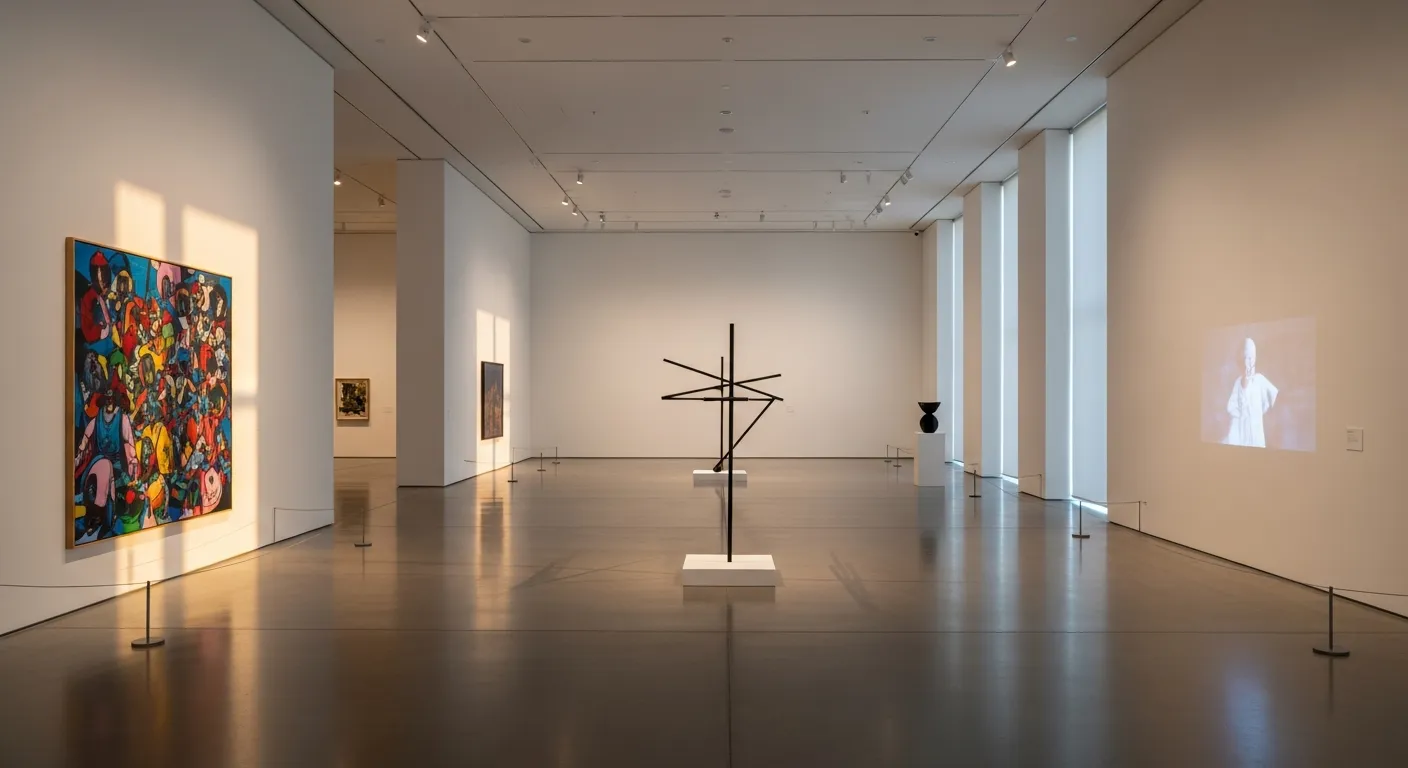
Museum of Modern Art (MoMA)
New York City · United States · Founded 1929
Plays a major role in developing and collecting modern art, and is often identified as one of the largest and most influential museums of modern art in the world.
3.5 million
Annual Visitors
200,000+ works
Collection
2–4 hours
Recommended Visit
Edward Durell Stone (1939) · Philip Johnson · Yoshio Taniguchi (2004) · Diller Scofidio + Renfro (2019)
Architect
About Museum of Modern Art (MoMA)
The Museum of Modern Art (MoMA) is an art museum located in Midtown Manhattan, New York City, on 53rd Street between Fifth and Sixth Avenues. It plays a major role in developing and collecting modern art, and is often identified as one of the largest and most influential museums of modern art in the world.
MoMA's collection offers an overview of modern and contemporary art, including works of architecture and design, drawing, painting, sculpture, photography, prints, illustrated books and artist's books, film, and electronic media.
The museum was founded in 1929 by Abby Aldrich Rockefeller and two of her friends, Lillie P. Bliss and Mary Quinn Sullivan. Since its inception, it has sought to challenge traditional and conservative museum practices.
Its comprehensive collection includes some of the most recognizable works of modern art, continually expanding to reflect the dynamic nature of contemporary artistic expression.
Masterworks & Must-See Highlights
The works that define Museum of Modern Art (MoMA) — and why they matter.
The Starry Night
Vincent van Gogh · 1889
Gallery 503, Fifth Floor
Painted in the Saint-Paul-de-Mausole asylum at Saint-Rémy-de-Provence, this swirling nocturnal landscape with an impossibly luminous sky is the most visited work in the MoMA collection.
Les Demoiselles d'Avignon
Pablo Picasso · 1907
Gallery 501
A radically new way of seeing — five nude figures rendered with fractured geometry and African mask-like faces. When Picasso unveiled it in his studio, Braque said it looked like an invitation to drink petrol. It launched Cubism.
Campbell's Soup Cans
Andy Warhol · 1962
Gallery 710
32 canvases depicting all varieties of Campbell's condensed soup — a deadpan celebration of American consumer culture and mass production. It announced Pop Art as the dominant new movement of the 1960s.
Broadway Boogie Woogie
Piet Mondrian · 1942–1943
Gallery 507
Mondrian's final completed painting, made after his arrival in New York, bursts with jazz rhythms — a grid of yellow and primary colour segments inspired by Manhattan's streets and the boogie-woogie music he loved.
Water Lilies
Claude Monet · 1914–1926
Gallery 409, Fourth Floor
MoMA holds three large panels from Monet's monumental Nymphéas series, painted in the artist's garden at Giverny. Together they wrap around the viewer, creating an immersive field of reflected light and colour.
Collections & Highlights
Frequently Asked Questions
A small ask before you go
You've just explored one of humanity's greatest collections of beauty. Art has the power to move us, inspire us, and change how we see the world. But millions of people will never see beauty like this — not because the art isn't there, but because they can't see at all.
Preventable blindness, caused by conditions like cataracts and trachoma, affects people of all ages across the world's poorest communities. A small gift — for the cost of a museum ticket — can provide a simple surgery to restore someone's sight and transform their life.