1.1 million
Annual Visitors
100,000+ objects
Collection
2–3 hours
Recommended Visit
Alfred Messel · Ludwig Hoffmann (1930)
Architect
About Pergamon Museum
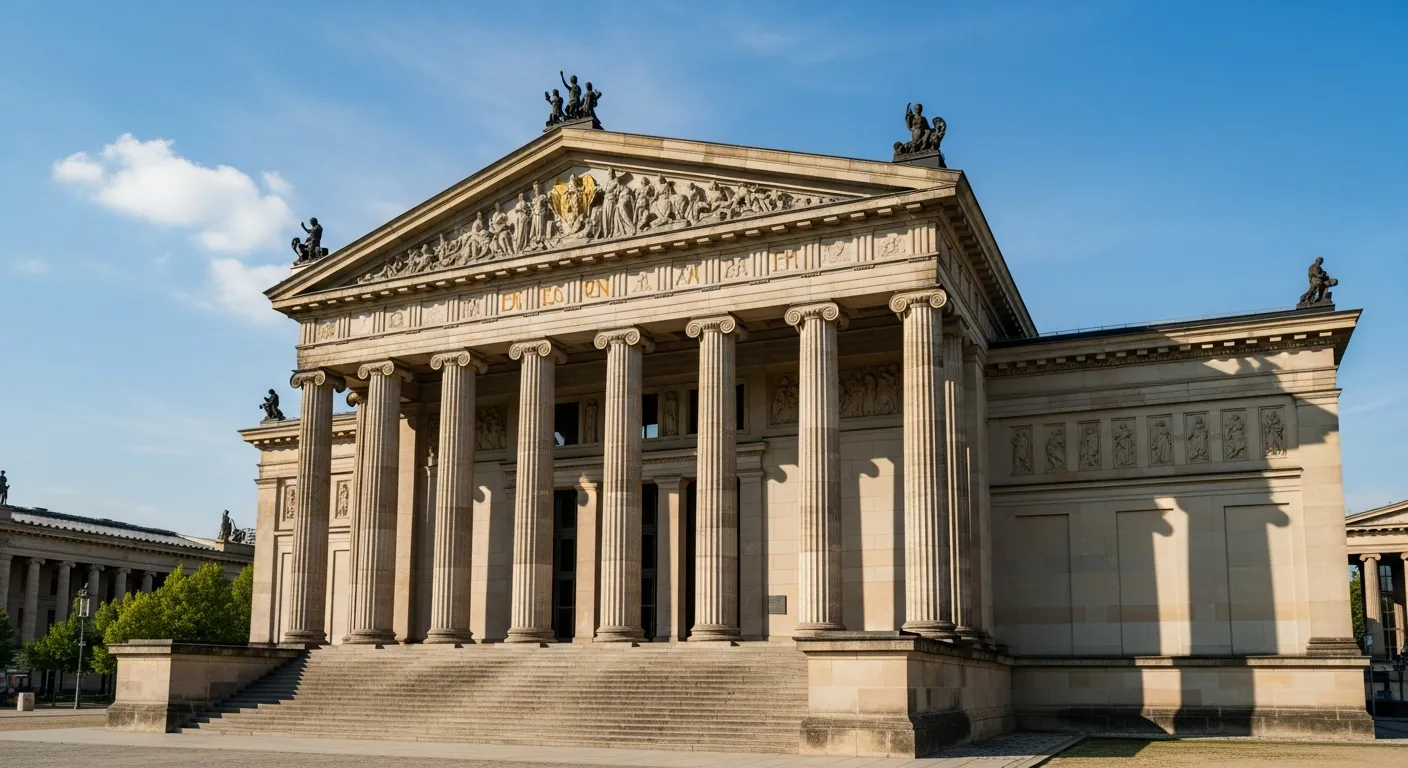
The Pergamon Museum is a listed building on the Museum Island in the historic centre of Berlin, Germany. It was built from 1910 to 1930 by order of Emperor Wilhelm II according to plans by Alfred Messel and Ludwig Hoffmann.
The museum houses three main collections: the Antikensammlung (Collection of Classical Antiquities), the Vorderasiatisches Museum (Museum of the Ancient Near East), and the Museum für Islamische Kunst (Museum of Islamic Art).
It is most famous for the monumental reconstructions of archaeological buildings such as the Pergamon Altar, the Market Gate of Miletus, and the Ishtar Gate of Babylon — all originally transported from Turkey, Greece, and Iraq.
The museum is undergoing a major multi-year renovation; large parts are closed and reopening in phases. Always verify current access before visiting.
Masterworks & Must-See Highlights
The works that define Pergamon Museum — and why they matter.
Pergamon Altar
Hellenistic craftsmen of Pergamon · c. 197–159 BCE
Pergamon Hall (currently under reconstruction)
A monumental altar with a 113-metre-long frieze depicting the battle of gods and giants (Gigantomachy). Brought to Berlin in the 1870s-80s from Pergamon (modern Turkey), it remains one of the greatest works of Hellenistic art.
Ishtar Gate of Babylon
Craftsmen of Nebuchadnezzar II · 575 BCE
Middle East Antiquities Hall
The eighth gate of ancient Babylon's inner city, decorated with glazed lapis-blue bricks and relief images of dragons (mushhushshu) and bulls. The reconstruction in Berlin uses original tiles; the largest collection of bricks used in this reconstruction.
Market Gate of Miletus
Roman architects · 2nd century CE
Antiquities Collection Hall
A two-storey Roman market gateway from the city of Miletus (western Turkey), reconstructed to 28 metres in width. Discovered in archaeological digs and transported to Berlin in 1907.
Collections & Highlights
Frequently Asked Questions
You Might Also Like


A small ask before you go
You've just explored one of humanity's greatest collections of beauty. Art has the power to move us, inspire us, and change how we see the world. But millions of people will never see beauty like this — not because the art isn't there, but because they can't see at all.
Preventable blindness, caused by conditions like cataracts and trachoma, affects people of all ages across the world's poorest communities. A small gift — for the cost of a museum ticket — can provide a simple surgery to restore someone's sight and transform their life.