2 million
Annual Visitors
120,000+ objects
Collection
2–4 hours
Recommended Visit
Watanabe Jin (Honkan, 1938) · Le Corbusier (planned; unrealised)
Architect
About Tokyo National Museum
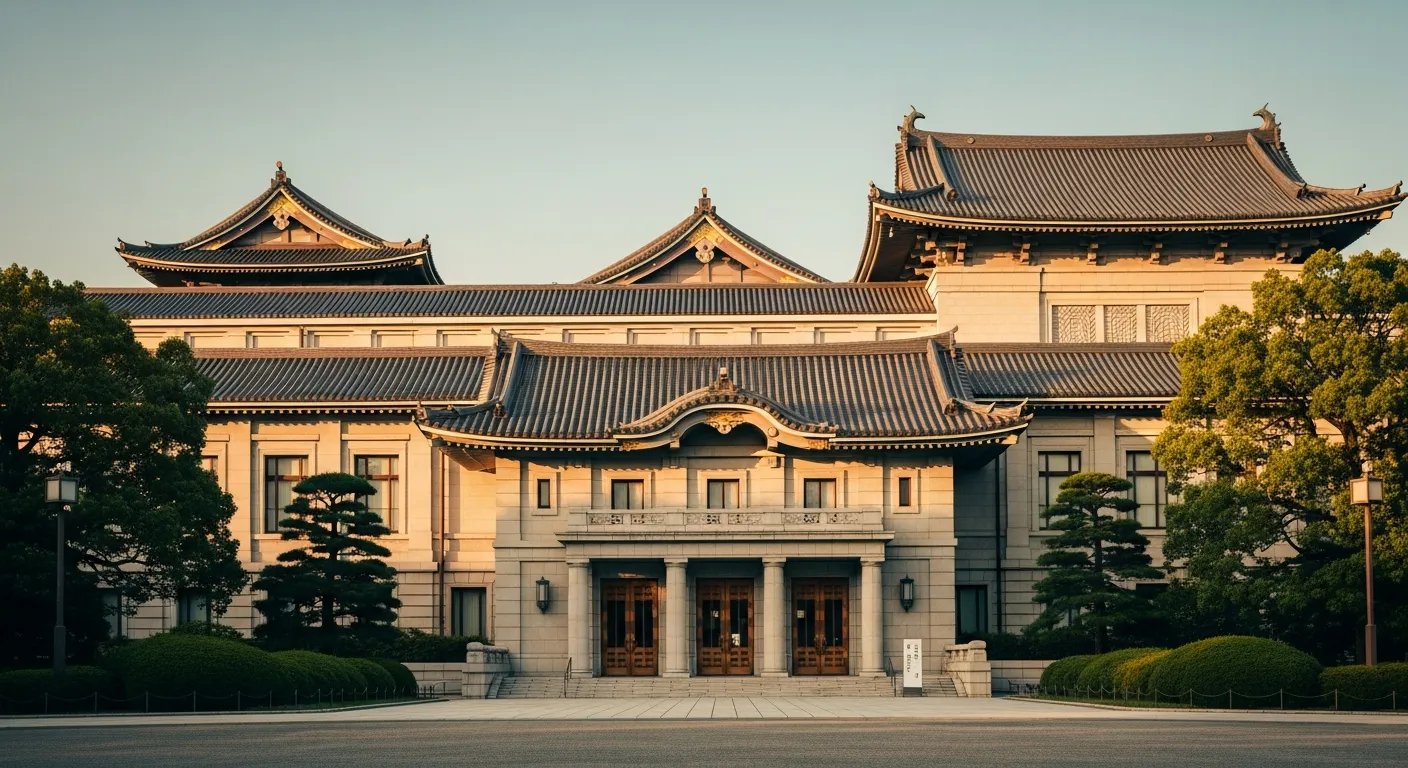
The Tokyo National Museum is an art museum in Ueno Park in the Taitō ward of Tokyo, Japan. It is the oldest national museum in Japan, the largest art museum in Japan, and one of the largest art museums in the world.
The museum collects, houses, and preserves a comprehensive collection of artwork and archaeological objects of Asia, focusing on Japan. The museum holds over 110,000 objects, which includes 89 Japanese National Treasures.
The complex consists of several distinct buildings, including the Honkan (Japanese Gallery), the Toyokan (Asian Gallery), the Heiseikan (Japanese Archaeology), and the Hyokeikan, each offering a unique architectural style.
Established in 1872, the museum has continuously evolved, expanding its role in preserving Japan's cultural heritage and presenting it to both domestic and international audiences.
Masterworks & Must-See Highlights
The works that define Tokyo National Museum — and why they matter.
Haniwa Warrior
Kofun Period craftsmen · 5th–6th century CE
Honkan (Japanese Gallery), Room 1
A terracotta ritual figure placed in burial mounds (kofun). The warrior's simple, expressive form — with hollow cylindrical body and defined face — is one of the most iconic images of early Japanese visual culture.
Shigisan Engi Emaki (illustrated scroll)
Unknown Heian artist · 12th century
Honkan, Room 3
A three-scroll narrative painting depicting miracles at Chōgosonshi-ji temple on Mount Shigi. Its energetic brushwork and sequential storytelling make it one of the masterpieces of Japanese emakimono (handscroll) painting.
Collections & Highlights
Frequently Asked Questions
A small ask before you go
You've just explored one of humanity's greatest collections of beauty. Art has the power to move us, inspire us, and change how we see the world. But millions of people will never see beauty like this — not because the art isn't there, but because they can't see at all.
Preventable blindness, caused by conditions like cataracts and trachoma, affects people of all ages across the world's poorest communities. A small gift — for the cost of a museum ticket — can provide a simple surgery to restore someone's sight and transform their life.