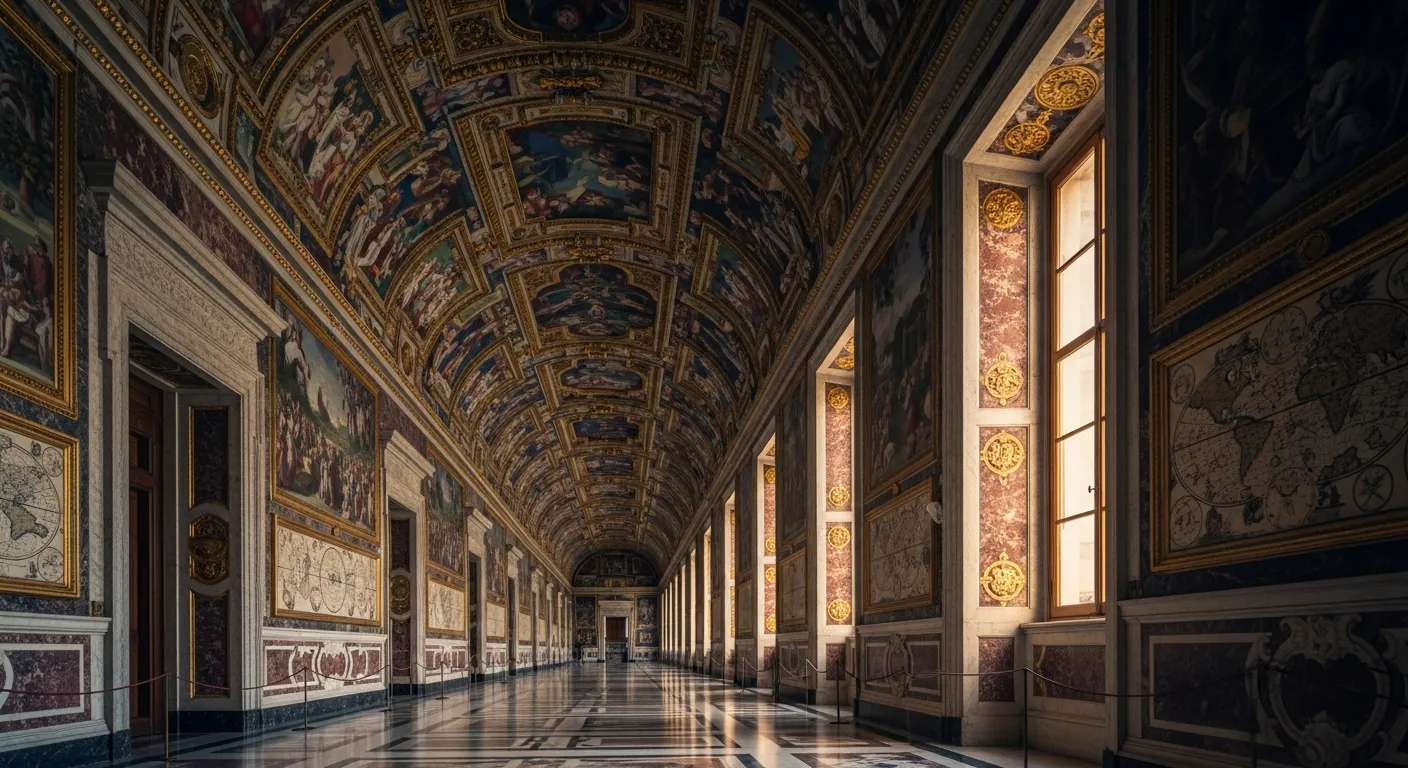
Vatican Museums
Vatican City · Vatican City · Founded 1506
The public museums of the Vatican City, displaying works from the immense collection amassed by the Catholic Church.
6.8 million
Annual Visitors
Over 70,000 works (2,000 on display)
Collection
3–4 hours
Recommended Visit
Donato Bramante (original galleries) · Michelangelo (Sistine Chapel ceiling)
Architect
About Vatican Museums
The Vatican Museums are the public museums of the Vatican City. They display works from the immense collection amassed by the Catholic Church and the papacy throughout the centuries, including several of the most renowned Roman sculptures and most important masterpieces of Renaissance art in the world.
The museums contain roughly 70,000 works, of which 20,000 are on display, and currently employ 640 people who work in 40 different administrative, scholarly, and restoration departments.
Pope Julius II founded the museums in the early 16th century. The Sistine Chapel, with its ceiling and altar wall decorated by Michelangelo, and the Stanze di Raffaello decorated by Raphael, are on the visitor route through the Vatican Museums.
In 2020, due to the COVID-19 pandemic, the Vatican Museums were visited by only 1,300,000 persons, a drop of 81 percent from the number of visitors in 2019, but still enough to rank it fourth among the most-visited art museums in the world.
Masterworks & Must-See Highlights
The works that define Vatican Museums — and why they matter.
Sistine Chapel Ceiling
Michelangelo · 1508–1512
Sistine Chapel
Painted on commission from Pope Julius II, Michelangelo worked lying on scaffolding for four years to create 1,100 square metres of frescoes depicting scenes from Genesis, including The Creation of Adam.
The Last Judgement
Michelangelo · 1536–1541
Sistine Chapel (altar wall)
Painted 25 years after the ceiling, The Last Judgement fills the entire altar wall. Its swirling mass of over 300 figures — including a self-portrait of Michelangelo as the flayed St Bartholomew — was considered shocking in its day.
Laocoön and His Sons
Hagesander, Athenodoros, Polydorus · c. 40–30 BCE
Cortile Ottagono
A masterpiece of Hellenistic sculpture depicting the Trojan priest Laocoön and his two sons being attacked by sea serpents. Discovered in Rome in 1506, it so impressed Michelangelo that it influenced his artistic development profoundly.
Raphael Rooms (Stanze di Raffaello)
Raphael · 1509–1524
Raphael Rooms (4 rooms)
A suite of four rooms painted by Raphael and his workshop, including the famous School of Athens — a fresco depicting the great philosophers of antiquity gathered beneath a classical arch.
Collections & Highlights
Frequently Asked Questions
A small ask before you go
You've just explored one of humanity's greatest collections of beauty. Art has the power to move us, inspire us, and change how we see the world. But millions of people will never see beauty like this — not because the art isn't there, but because they can't see at all.
Preventable blindness, caused by conditions like cataracts and trachoma, affects people of all ages across the world's poorest communities. A small gift — for the cost of a museum ticket — can provide a simple surgery to restore someone's sight and transform their life.